Showing posts with label honda. Show all posts

Cars Honda CR-V Concept


2012 Honda CR-V concept


Honda has released a picture of the concept version of its next-generation CR-V, and it looks, well, pretty much like we expected based on recent spy photos. The vehicle seen here is, as is typical with Honda’s concepts, a loosely disguised version of the production car.
That’s not to say that when the fourth-generation CR-V arrives at dealerships some time in late 2011, it will be festooned with some of the concept’s more colorful design elements. Items like the smoked-out headlights, prominent front skid plate, gargantuan wheels, and polished black lower trim likely will remain the domain of the show car. Otherwise, though, what you see here is what we’ll get.
Despite a relatively significant change in the CR-V’s design—it’s major by Honda’s conservative standards, at least—the new car will be mechanically similar to the one it replaces. Front-wheel drive definitely will again be standard, with optional all-wheel drive returning to the menu, too. It’s doubtful that Honda will make any major changes in the engine department from last year’s car, meaning that buyers will probably get a 2.4-liter inline four good for about 180 hp. Unlike the 2011 CR-V, which had a five-speed automatic transmission, the new model is likely to receive a six-speed unit. If Honda does go this route, you can expect a modest boost in fuel economy over the current CR-V’s 21 mpg city/28 highway for front-drive models and 21/27 for those with AWD.
While the CR-V has never fully roused the enthusiast’s soul, it has always been one of the more involving small crossovers to pilot. (Pun intended as an excuse to post a link to the face-lifted 2012 Pilot, which Honda also announced.) At the same time, the CR-V has been one of the more practical and easy-to-use small utes, too, a factor we’re sure is of higher importance to most of the people with one in their driveway. (There are a lot of those people: 227,760 CR-Vs were sold in the past 12 months alone.) We don’t expect those traits to change with this next-gen model, although we’ll have to wait until Honda decides to show us the production model to find out for sure.


Source : Caranddriver.com


Cars Honda Civic Si Coupe

For the past six years, we’ve felt a little like Estragon and Vladimir in Waiting for Godot. So many hours have been lost debating whether the previous-gen Honda Civic Si produced enough power to hold its head above water in the pocket-rocket pond. Eventually, this existential controversy morphed into a kind of recreation, with Si devotees screeching fiery epithets from the bleachers. Well, finally, Generation Nine is upon us. “We’re saved!” shouted Beckett’s protagonists whenever they suspected Godot might momentarily appearHere’s a sad fact: Godot never showed. And whether the Si is “saved” likewise remains unclear. Let us review recent history.

Our first encounter with the previous Si came late in calendar year 2005, when we pitted it against a Volkswagen GTI. The Honda lost. In 2009, we inserted an Si into a seven-car comparo, where it finished fifth, gasping and sweating. We weren’t surprised. The Si’s engine—2.0 liters, 197 horsepower, 139 pound-feet of torque—relegated it to least-powerful status in the whole segment. It certainly didn’t possess the grits to fend off, say, a 263-hp Mazdaspeed 3 Grand Touring or a 265-hp Subaru Impreza WRX. What’s more, accessing the Si’s horses has always required the spinning of the crank and cams to a fine fare-thee-well. The VTEC didn’t swap cam profiles until 6000 rpm, and it was thereafter vital to rely on every single rev right up to the colossal eight-grand cutoff.


Of course, Si purists—and trust us, they are legion—smugly insisted that the little howler-monkey engine comprised much of the car’s charm. Yet in the same breath, they’d also confess the coppery taste of  humiliation whenever a WRX achieved 60 mph 2.0 seconds in front of them, fast becoming a gnat on the horizon.

Now comes Honda’s solution for the ninth-gen Si, a solution both simple and a little surprising, given the rumors of a turbo. Out goes the 2.0-liter engine, in comes the naturally aspirated 2.4-liter unit that sees simultaneous duty in the Acura TSX. The result is an unnoticeable 4-hp gain, but torque is up 22 percent—peaking at 4400 rpm instead of 6100 rpm—and that’s a difference you can feel. While they were at it, the engineers paired the engine to the TSX’s delightful six-speed transaxle. But is that enough?

Well, sort of. At the track, the Si nailed 60 mph in 6.3 seconds versus the previous 6.7, and it proved a half-second quicker in our 5-to-60-mph rolling start. Turn off  the traction control, and you can now shred rubber for 15 feet, followed by a Rottweiler bark as you bang into second. An improvement, for sure, but it’s still shy of the accelerative thrust of five turbocharged competitors, including the Speed 3, the WRX, and even the GTI, which has a similarly meager 200 horses but can nonetheless summon 60 mph in 6.1 seconds.

On the other hand, the larger engine ushers in welcome perks. The mechanical thrash of the previous powerplant, for instance, is now largely MIA, and gear noise is likewise reduced, with all three of our sound-level tests confirming the fact. (Still, road-borne noise and tread roar remain issues that Honda must address.) Equally important, the number of shifts required for ’round-town cruising seems subjectively halved. In traffic, the Si is perfectly content relying on first, third, and fifth. And by eschewing a turbo, the Si’s mileage—now up to an observed 26 mpg—is best described as a charming achievement.


Yes, yes, 900 top-end revs have been lost. But the car now pulls with at least vague enthusiasm just after step-off. In fact, our only serious beef with the new engine is its considerable overrun when the throttle is suddenly dropped. Among other things, that makes for very little initial engine braking, and the revs sometimes take a couple of seconds to return to idle. Most drivers won’t complain, but it’s a behavior that lends the drivetrain a titch of laziness that has historically been anathema to Honda-think.

As with the previous-gen Si, this is among the most-neutral-handling front-drivers on the planet. Around our 15-mile public-road loop in southern Ohio, we could provoke only the most minor of nibbling understeer—and that was at speeds approaching Fear Factor Nine—with the rear tires faithfully following whatever paths had been established by the fronts. No rotation, no drifts, no drama. Body motions were exquisitely controlled, with the ride revealing the stiff springs and dampers only over high-frequency imperfections, primarily expansion joints and broken pavement.

At around-town speeds, the Si’s steering tends to feel artificial, as if it were the outcome of some sort of electrical/mechanical calculus that never precisely balanced. At least it’s light. As speed rises, fortunately, it firms up nicely and also becomes livelier. There’s no bump steer, no nervousness, and interstate tracking is peerless. The brakes are fade-free, and the pedal is firm and informative.


Moreover, the light, fluid shifter—as good as any that Honda has ever produced—allows the driver to summon alternate rev ranges with the flick of two fingers, abetted by a new lightweight clutch with simply seamless takeup. Faced with slow hairpins, the limited-slip differential carefully apportions power so that the inside front wheel never scrabbles. The thinly cushioned seats hold you firmly in place, and the dead pedal is perfectly sited. With lateral grip rising from 0.87 g to 0.90 g, the Si just dances and sings in the hills. This 2864-pound coupe is perfectly balanced, agile, poised, ever willing, a car that is easy to drive. Real fast comes real quickly.

The only obvious failure here is the unimproved interior. There are crass plastic trim bits on the steering wheel and around the HVAC controls. The Civic’s trademark minivan-sized windshield leans over a mini­van-sized dash, a vast plain of cut-lines, textures, and colors. The bunk-bed layout for the IP is okay, but the garish LCD gauges are right out of a RadioShack in Akron. The mouse-fur headliner suffers from the mange, and there’s a lumpy, wrinkled collar of felt that surrounds the steering column, shouting to one and all, “Yessir, that’s right, I actually am the cheapest bit of flotsam in the universe!” Note to Honda: Check out the Ford Focus’s interior.


The new Si—manual six-speed only—comes in both sedan and coupe forms. The coupe starts at $22,955, the sedan opens at $23,155, and both top out at $24,655. The only options are navigation, XM radio, and (exclusive to the coupe) summer tires—17-inch Michelin Pilot Exalto PE2s, as fitted on our test car. (Fun driving tip: Demand that your spouse call you “Pilot Exalto.”) If you’ve got a calculator handy, you’ll perhaps already know that a starter Si coupe is more than $1500 cheaper than either a GTI or a Speed 3.

This latest Si is more sophisticated than its forebear, although it has been somewhat cruelly left to play David to the turbocharged Goliaths. As of now, it offers a better ride, produces less noise, and is faster in both a straight line and through the most diabolical off-camber, double-apex turns that Ohio’s deranged civil engineers could conjure. It is surely less raw than its predecessor, a trait that many Si purists—including our own revered Tony Quiroga and Dan Pund—lament. Until they commit to a three-day, 800-mile road trip, two-thirds of which skates over frost-heaved interstates. No longer is the Si a one-trick pony. At speed it’s a serial killer, yet during commutes and city errands it’s a near-soothing mental-health counselor with practicality and a price that make it easy to justify.

Source : Carsanddriver.com

Cars Honda Civic Type R Mugen 2.2

Honda  comes with the latest version. Civic Type R MUGEN 2.2 is the work of Northampton-based MUGEN Euro, producing a unique version with even more power and torque. The cylinder bore and stroke have been increased to create an overall capacity of 2,156cc, so the car has been christened the Honda Civic Type R Mugen 2.2.
http://media.il.edmunds-media.com/honda/civic/2012/ns/2012_honda_civic_f34_ns_90811_717.jpg

The result of the change is a boost in engine output from 240 to 260PS, and additional torque is available throughout the rev range. Peak torque is now 240Nm at 6,000rpm. Compared to a standard Honda Civic Type R, both power and torque are up 30 per cent.
04 ]
Honda Civic Type R Mugen 2.2 - Interior, 2011, 1600x1200, 3 of 4

When coupled to the host of motorsport-derived components created exclusively by Mugen – including sports suspension, uprated brakes and a stunning performance bodykit – the Mugen 2.2 represents the ultimate expression of the Honda Civic Type R philosophy.It has been created as a fitting tribute to the highly successful Honda K20 2.0-litre petrol engine, which has ceased production in Japan. Homologated by Mugen as an FIA Group N race series engine, the K20 has long been the powerplant of choice with tuners and motorsports competitors who want the very best in naturally aspirated performance.http://wot.motortrend.com/files/2011/09/Mugen-Honda-Civic-Type-R-rear-three-quarter-623x389.jpg
The Honda K20 engine has also powered the only two complete road cars produced by Mugen; the Honda Civic Mugen RR four-door saloon sold in Japan, plus the limited Honda Civic Type R Mugensold in the UK.
Source : Lincah.com

Cars Honda Civic EX sedan

After having been wowed by the recent styling upgrades to the Hyundai Elantra and Ford Focus, it was a bit of a shock to see the comparatively tame styling of the 2012 Honda Civic sedan. Though 90 per cent of the Civic sedan’s bodywork is new, according to Honda, it looks very much like the 2011 model, except for its large tail lights which resemble those of the last generation Toyota Camry.

Read about the Autos.ca Test Drive: 2012 Honda Civic EX sedan

Ironically, it was the dynamic styling of the last generation Civic sedan that raised eyebrows when it was redesigned five years ago. Its sweeping profile and two-tiered digital instrument panel were bold design moves at that time.
2012 Honda Civic EX sedan

2012 Honda Civic EX sedan


This time however, Honda is playing it safe. Though the new Civic sedan continues to offer a short hood, steeply raked windscreen, and aerodynamic profile, subtle differences in the shape of the grille, front bumper, rear bumper and tail lights make it appear more conservative than the last model.
Source : Autos.ca

Cars Honda S2000, 2000-2009 - Used Vehicle

Read about the Autos.ca Used Vehicle Review: Honda S2000, 2000-2009

You might have called it Honda’s mid-life crisis, but unlike the 50 year-olds who go out and buy a sports car, Honda celebrated its 50th by building one.
A sporty Honda isn’t tough to wrap your head around, but for a company whose most overtly sporty car to that point was a Civic with 160 horsepower, the S2000 was Honda’s and-now-for something-completely-different moment, with a screaming 9,000-rpm four-cylinder good for 240 horses.
At the time, the S2000′s engine boasted the highest specific power per volume of any naturally-aspirated (that is, not turbo- or supercharged) production motor. That is to say, it produced more power per litre of displacement than any other naturally-aspirated engine in a car available in a showroom. The motor was mated to a standard six-speed manual transmission (the only one available) and a Torsen limited slip differential.


Used Vehicle Review: Honda S2000, 2000 2009 auto articles

In 2004, Honda made some cosmetic and mechanical tweaks to the S2000. Most significantly, these included bumping the engine’s displacement to 2.2 litres by way of a longer piston stroke; horsepower remained the same, but torque increased to 162 lb-ft at 6,200 from the previous peak of 153 lb-ft at 7,500 rpm. The longer stroke resulted in a lower redline of 8,000 rpm.
In addition to the larger motor, the transmission got shorter ratios for gears one through four and taller ratios for fifth and sixth.
In 2006, Honda added a drive-by-wire throttle and Vehicle Stability Assist.
For 2008, the S2000 gained a tire pressure monitoring system, updated dash and gauges and a few new colours.
For a full list of differences between 2000-2003 and 2004-2009 cars, check this thread.
In typical Honda fashion, fuel consumption is decidedly palatable for a sports car, with EnerGuide ratings of 11.8 L/100 km (city) and 8.4 L/100 km (highway). Autos.ca contributors Paul Williams and Frank Rizzuti, both S2000 owners, report that those figures are quite realistic in real-world driving. Premium fuel is a requirement, though. Reliability has been solid, generally, but Consumer Reports (CR) data indicates a few things to watch for. One is what CR dubs the potential for “major” engine problems in 2003 through 2005 models. The publication doesn’t provide specifics, but possibilities include a stuttering engine caused by a bad manifold air pressure (MAP) sensor or an ignition system misfire, which can be caused by any number of things. Source : autos.ca

Automakers Forecasted to Lead the United States Market in 2011

http://findscar.files.wordpress.com/2011/06/nissan2bskyline2b2.jpg


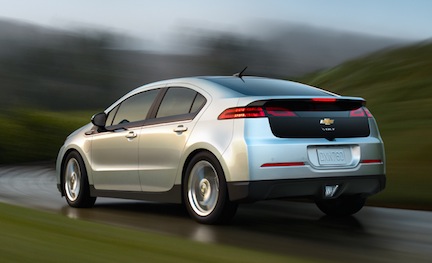
General Motors wants to be the plug-in leader with the Chevrolet Volt, a plug-in hybrid with 40 miles of electric range and 500 miles per gasoline fill-up range. Chevrolet will deliver over 10,000 in 2011. GM has a complete Voltec Propulsion System roadmap that envisions added offerings of pure battery-electric, E85, and diesel. The second plug-in offering from GM is likely to be a Chevrolet Crossover SUV. Look for a range versus cost battle with Toyota, as the Volt achieves more electric range by adding to vehicle cost with a 16kWh battery.
Ford Focus EV 57k 150x150 Top 10 Electric Car Makers 2011Nissan Leaf 115KB 150x150 Top 10 Electric Car Makers 2011Nissan will be the first automaker to put over 10,000 pure battery-electric cars on U.S. highways. 20,000 have made deposits for Nissan Leaf and several cities are in major partnerships. The LEAF can be purchased starting at $32,780 or $349 per month. The Nissan LEAF is battery-electric with a 100-mile range per charge. LEAF Test drive. This 5-door, 5-seat, hatchback has the right size and range for many who drive under 100 miles daily, or for households with more than one car.

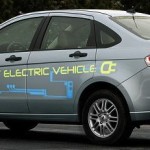
Ford will be selling at least two electric cars by the end of 2011 and five models by the end of 2012. The best seller will be the Ford Focus Electric, a battery-electric that we expect to aggressively compete with the Nissan Leaf. Ford will be taking orders for a 2012 C-MAX Energi plug-in hybrid, an exciting Crossover SUV that seats 5. In the future, the Ford Focus available any way the customer wants it: battery-electric, plug-in hybrid, hybrid, or fuel-efficient sedan. Ford is already selling the Transit Connect Electric compact van.
Tesla Test Drive 62k 150x150 Top 10 Electric Car Makers 2011 
Tesla is the first to sell 1,000 electric cars for the U.S. highways. Tesla owners are the first to put 10 million electric miles on the road. Like its Roadster, the company is going zero to sixty in less than four seconds. Tesla is also developing a roomy Model S hatchback that starts at $57,400, about half the price of the Roadster. The Roadster is battery-electric with a 240-mile range; the Model S will have remarkable electric range options of 130 to 300 miles per charge. Tesla is working with shareholder Toyota to bring back the Toyota RAV4 EV, an electric SUV. Tesla is working with shareholder Daimler to put Smart EDs on U.S. streets this year. In the future, the Tesla Model X will be a Crossover SUV for those that want more premium styling and interiors than alternatives from Chevrolet, Ford, and others.
Fisker Karma Addison 49k 150x150 Top 10 Electric Car Makers 2011 
Fisker Karma is a luxury sports plug-in hybrid with prices starting around $90,000. With 20kWh of lithium batteries, you could go 50 miles before the 2L turbo engine is engaged. The Karma invites you to accelerate, using two electric motors that deliver 403 horsepower, so your mileage may vary. In theory it’s a 4-seater; good luck fitting someone in the back seat. The Karma is about sex appeal, performance, and luxury. A more affordable family sedan is planned for 2012.

Scott Lang Prius Plugin 25k 150x150 Top 10 Electric Car Makers 2011Toyota, world-leading seller of hybrids, will offer both plug-in hybrids and pure battery electric cars. The Prius Plug-in Hybrid (PHV) looks like another Prius until you spot the J1772 plug for smart charging. Six hundred PHV are in fleet trails from cities to car sharing services. Next year, you can order the Prius PHV. Toyota will initially control costs by only using a 5kWh battery for a 14-mile electric range. In 2012, Toyota is likely to also offer the RAV4 EV SUV and a pure battery-electric FT-EV small city car.
Honda Fit EV preview 150x90 Top 10 Electric Car Makers 2011Honda is preparing the Honda Fit EV and a plug-in hybrid for sale in the U.S. in 2012. The Fit EV is in demonstration program in fleets such as Google and Stanford University. We speculate that the new EV will use Blue Energy lithium-ion batteries and will price below $29,900.

Mitsubishi is currently the electric car market leader in Japan with the iMiEV.
Mitsubishi i 150x150 Top 10 Electric Car Makers 2011In 2012, the U.S. version of the Mitsubishi I will price at less than $29,900. This fun-to-drive 5 door, 4 seat hatchback, will have a wheel base 5 inches wider for the U.S. market, but the micro-compact will still be able to get those precious city parking spaces that no other car can take except the Smart. The more powerful U.S. version will have an electric range of 50 to 80 miles with a 16kWh lithium battery.
WattStation Smart EV 150x150 Top 10 Electric Car Makers 2011 

 Daimler is bringing the Smart Fortwo ED to the United States. 250 Smart Fortwo ED will be put into U.S. test this year using Tesla battery packs, but smart is currently targeting the 2013 model year for the first commercial electric car. It will start taking consumer and fleet orders in 2012. Daimler also owns 5 percent of Tesla. Mercedes hybrids. BMW will accelerate electric plans in a couple of years. Mercedes is putting into fleet tests two 5-seat hatchback electric cars – the A-Class E-CELL battery-electric car with 120-mile range and the B-Class F-CELL, which adds a hydrogen fuel cell to double the range.
Think City COP 150x150 Top 10 Electric Car Makers 2011 
Think has been selling its smaller battery-electric City car in Europe for years. With new capital from EnerDel, Valmet, and Kleiner Perkins, Think hopes to have its financial struggles in the rear view mirror and be on U.S. roads within a year.


U.S. Electric Car Forecast

Accenture forecasts 1.5 million electric vehicles in the United States by 2015. Over 10 million electric vehicles are possible by 2020, especially if oil prices continue to rise as battery prices fall. Single electric utilities have scenarios for charging over one million electric vehicles in their own service area by 2020. With renewable energy investment required of utilities in 30 states, these utilities are most interested in night time charging of electric vehicles with wind, geothermal, and hydropower. Utilities are also implementing smart grids and incentives for off-peak charging.
By 2011 year-end, competition will be intense for electric car leadership. The above Top 10 describe our best guess about the market share leaders for delivered plug-in vehicles on the United States roads in 2011. Battery-electric vehicles, plug-in hybrids, and electric vehicles with range extended by engines or fuel cells were all considered.
Over 100 competitors will be fighting for U.S. share by the end of 2012. Some may be struggle to get significant share due to the time and cost of safety and other regulatory approvals, delays in funding, unpleasant surprises from a battery, drive system, or component supplier. It’s a tough business. Even Tesla had to add 700 pounds and two years to get the first Roadsters in customers’ hands.

Asia Prepares for the U.S. Market

For three years, we have read about China’s plans to bring electric cars to the U.S. Although China’s U.S. ambitions have slipped badly, its automakers cannot be ignored. China has over 100 million light electric vehicles, e-bikes and e-scooters in daily use. It’s new 5-year plan calls for 100 million electric charging stations in China by 2020. BYD, with gold-plated investors such as Warren Buffett, has only put a few hundred electric vehicles on the road in China and continues to delay introduction to the United States. CODA’s $45,000 sedan continues to seek DOE loans and more investors and has delayed sales until Fall 2011, or later. Volvo, now owned by China’s Geely has the new C30 Drive E Electric. I was impressed with my test drive, but the Volvo electric car will be selling only in Europe in the short-term. SAIC, Chery, and hundreds of players are also preparing EVs for Chin
India might bring us a Maharinda Reva or Nano EV that under prices everyone, but not this year which is the basis for this Top 10 Report.

European Innovation

By 2020, Europe with higher fuel prices and fewer oil subsidies, is forecasted to have more electric cars by 2020 than the U.S. Better Place may deliver 100,000 of the Renault Fluence with its switchable battery to Israel, Denmark, and other countries. Volkswagen may teach everyone how to extend range by making vehicles light. The concept Up Light weighs just over 1,500 pounds, but it’s only a concept. I loved test-driving the Volkswagen Golf Blue E-Motion, but don’t plan on buying it in the U.S. before 2014. You will likely be able to buy the Audi E-Tron sooner. BMW’s first U.S. electric car commercial offering, the Megacity Vehicle, may be a hit in 2013. For fun in the city in 2013, the Fiat 500 EV may be what you want. In other words, there is a lot of European innovation that did not make this Top 10 List, which focuses on the U.S. market for the next 12 months.
Please bookmark this Top 10 List and check back as we update. Exciting new electric cars are being driven on the U.S. streets and freeways. Nissan is an early mover with battery-electric cars and General Motors with plug-in hybrids. Competition will start to heat-up with offerings from Ford, Toyota, Honda, and dozens of Asian, European and American innovators. The winner will be the customer.
Source : cleanfleetreport.com